My True Story of Being Healed by Prayer (Part 2)


Yesterday, I shared the first part of my story about how God has healed me of my psoriasis through prayer. (Click here to read Part 1 of my story of healing.) 

Here's what happened next...

For three years, I was healed of the pain, the itching, the lost hair.

But then, a couple of months ago, I started noticing the itching returning, the hairs gathering on the shower drain. I prayed and prayed for myself, but to no avail. So then I told my husband about it and asked him to pray for me. He did, and it stopped once again.

I told him the good news but then, a few days later, it started again. I had the feeling that this was a story that God did not want to go silent. I had the feeling that this was a means for me to be bold in asking for prayer—and a testimony to others.

So I went to my community group at church and asked them to pray, telling them about the two previous bouts of being healed.

They prayed for me. And then, like both times before, by the following day, all was well and I could again claim being healed.

It was enough to make me wonder, “Why?”

Why can I pray for myself to no avail, but the moment I let go of my pride, open myself to vulnerability and ask others to join me in prayer, does that prayer get answered? Why does it get answered so immediately, when others’ prayers don’t?

I don’t have all those answers. But I do know that I feel like in my instance, it’s an opportunity that God has used and wants to use to proclaim his name over everything, over people like me, over situations like mine, over the complete ordinary events in life—even a scalp that itches.

I feel like it’s an opportunity for me to continue to let go of my pride and open myself to vulnerability to tell others what God hath done for me, and that though it might look very different in your own life, it’s what he wants to do for you, too. It may not be a physical healing, but maybe emotional or relational. Maybe it’s neither of those, either. But what it most certainly is, is a spiritual healing that transforms hearts and minds and souls to a goodness and a peace never otherwise understood.

Jesus spent so much of his ministry healing brokenness, particularly of the physical variety. In one notable instance, he heals ten lepers. Yet, only one of the healed men (who also happened to be a Samaritan) returns to thank Jesus. “'Didn’t I heal ten men?'” Jesus asks. “'Where are the other nine? Does only this foreigner return to give glory to God?' And Jesus said to the man, 'Stand up and go. Your faith has made you well.'” (Luke 17:17-19)

I may not know why it all happened, but I know that it did. And I know that I do not want to be like one of the nine who took the healing without giving glory to the One who healed them.

No, I will give glory to my God who healed me: Praise God, I’m healed!

Related Posts
Amy's Testimony: Beyond the Physical Healing
The encouraging testimonies of answered prayers
READ FULL POST >>

My True Story of Being Healed by Prayer (Part 1)


I have a soft spot in my heart for stories about people who have been healed, not by medicine but by God himself. That’s because I believe in those stories, having known people who have been miraculously healed, having prayed for it with my own lips, having experienced it myself, firsthand.

I know many people scoff at the idea of miracles these days, especially miracles that happen to one person, when another person lies ill and their prayers go unfulfilled. Truth be told, I don’t consider myself “worthy” of having been healed because my situation pales in comparison to those others out there who are facing life-and-death illnesses. But it is for that very reason that mine is not only a story of being healed but also a story of grace and mercy. Isn’t that—to display grace and mercy—what the Bible, what Jesus’ ministry, was all about in the first place? I’m here to tell you that truth is alive and well today.

This is a post I’ve been meaning to write ever since I first started this blog, but a post that I never quite seemed to have the words for, until now…

I remember noticing it my sophomore year in college, when my scalp started itching a lot. I found myself literally scratching my head over the matter, always reaching
up to the nape of my neck to scratch at the lingering itch. This went on for days, for months, for years.

At some point, I realized that it wasn’t really normal, this incessant itching. It was causing my hair to noticeably fall out, not a good fashion statement for someone already saddled with fine, thin hair. I read magazine articles about how to make your hair thicker and healthier, so I bought some vitamins. I tried different shampoos, even medicated ones to keep my hair from falling out. Nothing really helped.

I finally went to the doctor and then the dermatologist who diagnosed me with psoriasis, a disease that affects the skin (in my case, my scalp). Put more scientifically, it’s “an immune-mediated disease that appears on the skin … when the immune system sends out fault signals that speed up the growth cycle of skin cells.” (You can read more here, if you’re interested.)

The dermatologist prescribed me with some ointments I could use that would alleviate the itching but not cure the condition. My hair was still falling out, and I still had to fight the urge to scratch the itch that was always burning at the back of my head.

It was around this time that I started going to a prayer group that met at my church. It was a place where people believed that prayer worked and the fruits of that faith were seen week after week. (You can read more about my experience attending that prayer group here, or about some of the answered prayers that happened there, here.)

One week, we got together and instead of breaking into individual prayer groups, we all wrote our prayer requests down on a scrap of paper and dropped them into a cardboard box. Everyone gathered around the box, prayed over it, and then the scraps were destroyed without ever having been read by another pair of eyes. On my scrap of paper, I wrote that I wanted my psoriasis healed, I wanted my hair to stop falling out.

The next day, I took a shower and as I washed my hair, I looked down at my hands and didn’t see the usual clump of hair laced around my fingertips. Honestly, I was shocked to think that the prayer had worked so quickly. So I waited another week, just to be sure my eyes weren’t deceiving me.

They weren’t.

To be continued... Tomorrow I'll share Part 2 of my story about how God has healed me of my psoriasis through the courage of a single prayer.  

"Confess your sins and pray for one another, and you will be healed. 
The prayer of a righteous man is powerful and effective."  
(James 5:16)

Related Posts
Amy's Testimony: Beyond the Physical Healing
The encouraging testimonies of answered prayers
READ FULL POST >>

A Few of My Favorite Things: Bible Study Resources Edition

These are A Few of My Favorite Things, an on-going, once-a-month (or so) series that sheds some light on, well, my favorite items throughout my home. (To read through all posts in the series, click here.)

In this Bible Study Resources Edition, I'll be looking at five of the resources that I find most essential to nurturing a deep quiet time with the Lord and his Word each day.


1. Life Application Study Bible (New Living Translation): This is the study Bible I currently use in my daily Bible reading. I have been using it consistently for almost a decade and have come to love how it provides a great mix of insights from how to apply what I'm reading to my own faith to gaining a better understanding of the historical and cultural contexts of what's in the text. You can read a more in-depth review of this study Bible that I wrote about here.

2. Devotion Journal: I've found that it's much more fruitful for me to take notes while I'm reading through the Bible or praying, so I recently created a devotion journal where I can write out my thoughts, prayers and notes all in one place. There are sections devoted to a variety of categories, which helps me be able to go back and see what I learned about a certain section I was studying or read through prayers and see how God has answered them. I wrote more about creating my devotion journal (along with instructions for making your own) here.

3. Seminary Lectures and Podcasts from iTunes U: Thanks to iTunes U, you can download lectures from a variety of seminaries around the country and listen to them for free. I've found this really helpful, as I've been wanting to dig deeper into certain bits of Scripture and hear insights from other scholars. Some favorites that my husband and I like to listen to come from Reformed Theological Seminary, Fuller Seminary, Dallas Theological Seminary and Covenant Theological Seminary, all of which have selected lectures available on iTunes U.

4. YouVersion: YouVersion is a free app you can download onto your computer or mobile device (I have it on my iPod) that includes hundreds of Bible translations in all different languages. I've found it helpful to have on hand when I'm reading a verse and am not quite sure what it means; I'll pull the verse up in this app and scroll through the different translations of it so that I get a better understanding of what the verse means. It's also handy to have with you on the go to be able to look things up. You can bookmark verses, use their Bible reading plans and more via the app.

5. Bible Study Workbooks: I've done a lot of Bible studies in my day, but there are a couple that I keep coming back to because they were so enriching for me: Beth Moore's Stepping Up: A Journey Through the Psalms of Ascent and Priscilla Shirer's Discerning the Voice of God. Whereas I feel like a lot of packaged Bible studies can be overly simplistic and empty, both of these were eye-opening for me and taught me so much about the Lord and my relationship with him. They both include lots of space for taking notes and engaging with the text as you go, as well as delivering deep insights and personal stories that brought the texts alive for me like never before. I've written more about the Stepping Up Bible study here and a little about Discerning the Voice of God here.

What are some of your favorite Bible study tools and resources? Anything you think I should check out? Let me know in the comments!


Related Posts
Psalms Bible Study Review 
Making the Psalms Your Own
10 books I want to read 
READ FULL POST >>

What I've Been Doing with Our Extra Books: Selling Them on Amazon


One of the first things I remember admiring about my husband, back when we first met, was his love for reading. I remember listening to him share what he had learned in this book or read about here and it felt, only two days after our first date, like a kindred spirit already.

When we got married, this love for reading became evident in our collection of books that easily filled our bookshelves—taller than we were—and spilled their way into the other shelves throughout our apartment. But it really hit home when we were making our grand Grand Rapids-to-Atlanta move and had to haul all those books that 800-mile stretch of highway and up two flights of stairs.

With my muscles pleading for mercy, I knew we needed to whittle those suckers down. Not only did we have duplicates of some of the same books (see, I told you we were kindred spirits!), but we had collected many books that we would honestly never read or reference again.

So, I decided to look into selling them online, something a few other bloggers I follow seem to have had luck with. I was a little weary of this at first; I've only ever bought a couple things off eBay to begin with. But I figured it was worth a try, so I crossed my fingers and threw some books up for sale on Amazon, using their "used" section.

Within days, books started to sell; five in the first week, two more the week after. In the first month, we made about $75 profit selling books, dvds and cds. (Want to see what is currently up for grabs from our Amazon shop? Check them out here.)

Especially exciting was one book I'd picked up a few years ago at a dollar store with intentions of giving away as a gag gift. It was this retro-looking book called "How to Be a Man" with tongue-in-cheek advice about being macho and masculine. Anyway, when I looked it up, other sellers were hawking it for upwards of $60! Since I'd only paid $1 for it, I put it up for $24, unsure if anyone would even pay that much for it. What do you know, but someone did snatch it up, stretching that dollar investment much further than I'd ever expected!

I've been selling our extra books on Amazon for more than a year now and have used it as a nice little way to add some cash to our savings accounts, although sometimes it's only $5 or $10 a month, depending on how many books we manage to sell. You can read more about how to sell your books and other media through Amazon here.

If you're interested in trying to sell books on Amazon, here are some tips:

Know that they do take a commission off the sale. I've found it's usually between $3 and $6 off every book. So even though you put in a sale price of $5.99, after they take their commission and you pay to ship the book (I also make sure to include delivery confirmation on every package), you're only left with about $3.50. To me, if it's a book I didn't want or need anyway, that's still a better price than I would get if I took the book to a resale shop or tried to sell it at a garage sale.

You aren’t going to be able to sell every book. This is especially true with bestsellers or classics because tons of people are already selling them for pennies, which you can’t compete with at all or you'll lose money.

You have to package and ship the books yourself. That can be a bit of a hassle, and you'll have to provide your own shipping supplies.

An alternative way to make some extra money. If you don't need the money immediately and are willing to wait for your books to sell, it can be a potentially profitable way to get rid of media that’s just eating up space on your shelves and make more money than you would taking your stuff to any resale shop.

(Get more details about how to sell your books and other media with Amazon here.)

Have you ever sold anything on eBay, Amazon or Etsy to make some extra cash? What's been your experience? Share your thoughts in the comments!

Related Posts
3 Easy Ways We've Learned to Stretch Our Finances
Being Intentional About Saving Money
READ FULL POST >>

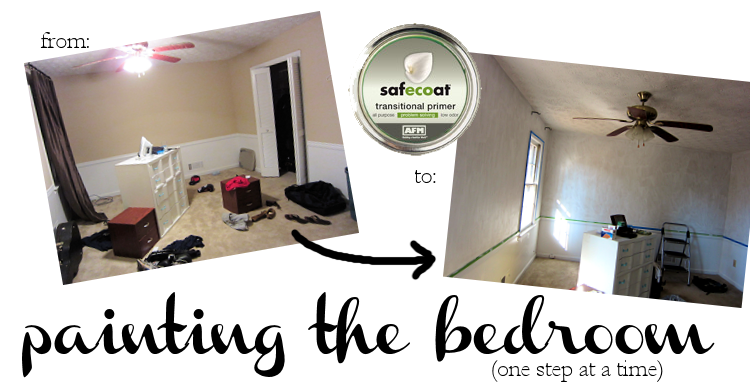
We Started Painting Our Bedroom… (Or, How We Celebrated New Years' Eve)


We are not the most ambitious of homeowners, my husband and I.

Exhibit A: The fact that we picked out the paint color for our bedroom the week before we signed the contract on the house. But when it came down to actually painting it, well, we kept pushing it off, even though we had set up our boudoir in the house’s smallest room, what will eventually be the guest bedroom.

You’d think the fact that we were living in a room that was nothing more than a bed and a lamp without a lampshade (the life of luxury, friends!), that we’d be motivated to get the paint up pronto.

It finally wasn’t until New Year’s Eve that we bit the bullet, holed ourselves up in the room and started painting.

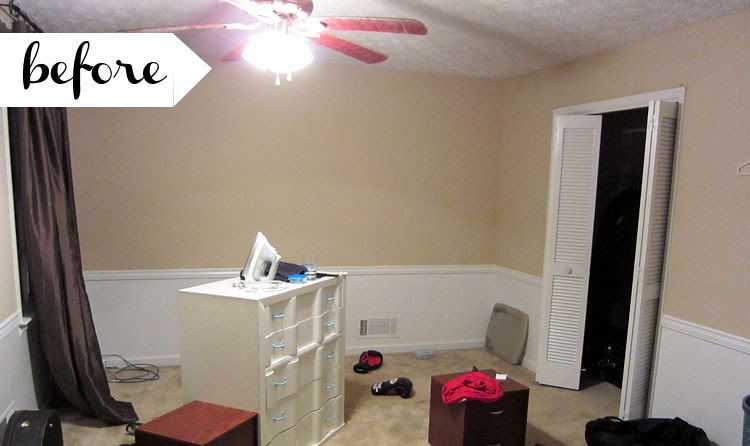
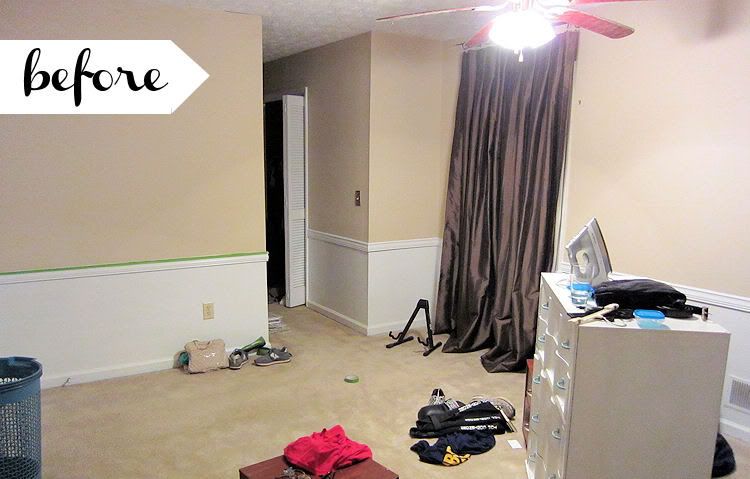
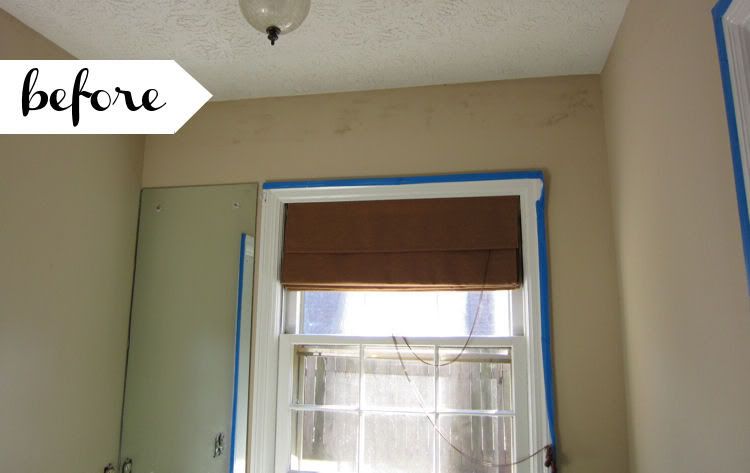
Here are some before pictures to refresh your memory:


(You can see more "before" pictures of our new house here.)

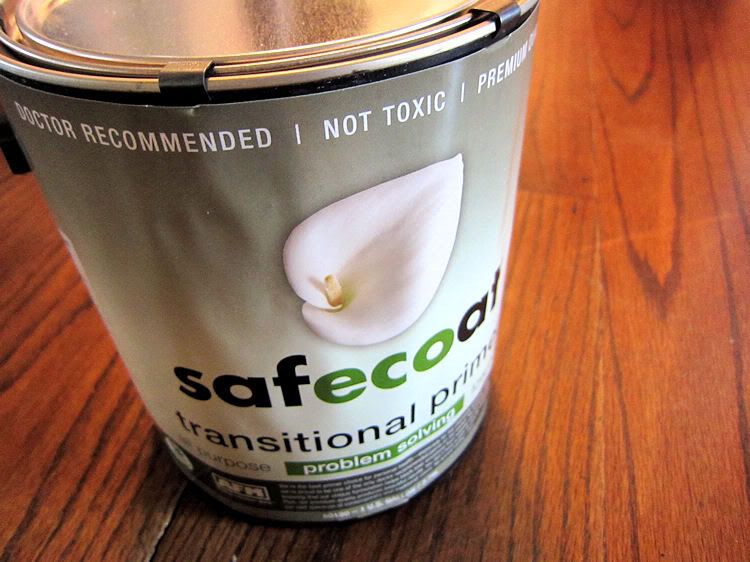
With the goal of using paints that are both safe for the environment and for our health, we turned to a brand that you might not be familiar with but that has gained a reputation for being a premium product without use of any toxic or malodorous chemicals: Safecoat.


You might have to search to find their products (for instance, there’s only one store in Georgia that sells their paint), but it’s worth it when you consider their good-for-you health claims:

Because their naturally low-odor paint blocks toxic emissions from seeping into the environment and does not include formaldehyde, ammonia, acetone or a list of other carcinogenic/hazardous materials (which other low-VOC paint brands may count among their ingredients), their products are specifically recommended for those who are chemically sensitive (my husband falls squarely into that category) and is a doctor-recommended paint. In fact, many hospitals and schools use Safecoat paints because of this. According to their website, they claim that it’s the least toxic product of its type.

They sent us a gallon of their transitional primer, which serves as a good stain blocker for covering up a myriad of eyesores, whether knot holes, oils or stains that can bleed through to the surface with traditional waterbased paints.

With 2011 ticking away, we took the first step of painting our bedroom and started priming. While there was a slight but noticeable smell, it was not overpowering and didn’t bother my husband, who is extra sensitive to chemicals and smells.

The paint went on easily and because it’s waterbased, was easy to clean up if we accidentally dripped or went over the painter’s tape. That is one of my favorite things about the prevalence of waterbased paint—it’s so forgiving!

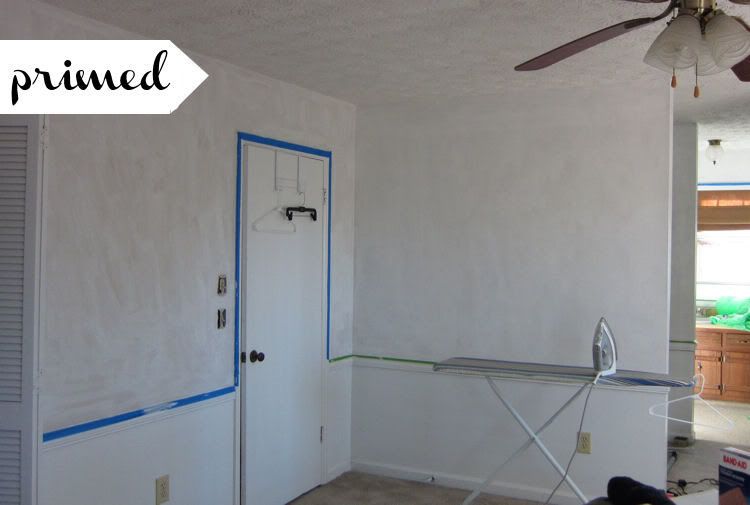
We worked at painting for the next few hours, and we still had half a can of the primer leftover, which goes to show the paint provides great coverage.

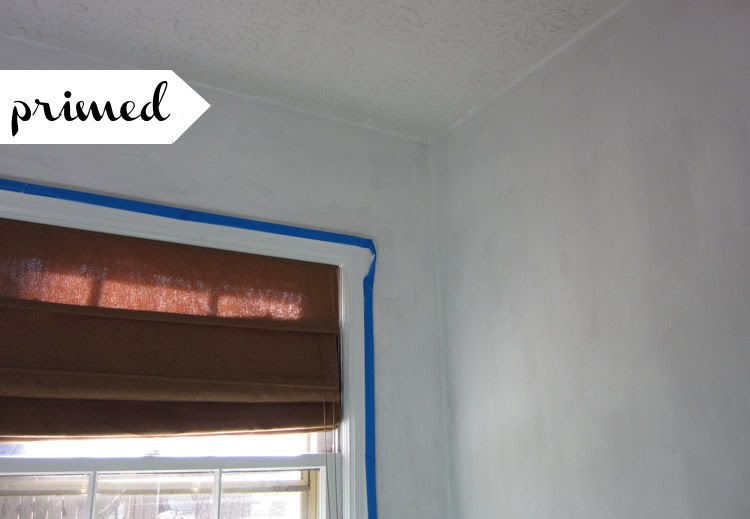
Here's how well it covered up the walls:


So, then, with the primer drying on the walls, we celebrated the New Year like the homeowners we officially are: We went to bed around 9pm, whooped from our DIY workout!

And now? Weeks later, it still looks the same. That’s where our ambition has faltered. Hopefully, not for much longer, though. I’m hoping it’s something we can throw on the to-do list this weekend. And finally start sleeping in our real bedroom. Talk about sweet dreams!

If you’re interested in learning more about Safecoat’s line of paints—which includes the transitional primer that we used but also a variety of interior and exterior paints, stains, sealers and more—you can visit their website or check out their map to locate the closest dealer near you.

Related Posts
The Process of Turning a House into a Home
Dishes and Papers Pile Up, and I'm Okay With That...
READ FULL POST >>

The Importance of Having a Devotion Journal (And How I Created My Own)


Over the past couple of weeks, I've been sharing some resources and inspiration to encourage some of you to make daily time spent with the Lord and his word a priority.

First, I talked about why I think making time for the Lord is the most important resolution we can make. I shared about my goals for the year regarding my Bible reading plan and my fondness for the reading plan that I used last year.

Then I shared reviews of the study Bibles that get the most use in my house, and some tips for choosing a study Bible of your own.

Now we're rounding the bend...

Because once you have a plan for reading your Bible in place and whatever Bible you want to use, the next most important item in my experience for getting the most out of my daily time with the Lord is having a devotion journal.

That's the place where I can take notes on what I'm reading, record prayer requests and answers, journal out my day and keep track of anything else that comes to mind while I'm sitting at the Lord's feet.

While I've used the same Bible study for almost a decade, that has not been the case with the devotion journal I've used, as it's taken on a myriad of incarnations. (I wrote more about a bunch of my past attempts here.)


But I think I've finally found one that really works for me. One that takes the best of all the worlds of all the different kinds of tried—from notebooks to binders—and melds them into one.

It's a devotion journal that I made myself, and no doubt that it shows that it's obviously handmade.

But I love the versatility of it, that I can switch pages around and group them together as I wish, like a binder. But I can also lay it flat and write on the backs of pages smoothly like a spiralbound notebook.

Those little things probably sound ridiculously picky. But they were significant enough that they would affect how much I'd make use of it. And since I want to really know the Scriptures, I've decided that if I’m going to be picky about something, I want it to be about something as important as this.

Which is why I got the inspiration to blend the best of both worlds and build my own devotion journal, which you can add pages to, divide up easy as pie, and scribble flatly on both sides of the paper. Oh, joy.


Here’s how I created my own.

You’ll need:
  • 2 pieces of sturdy cardboard or plastic to use for the cover (consider repurposing cereal cut to size)
  • Hole punch
  • 3 binding rings (find in an office-supply store, near the paperclips or online here)
  • Filler paper, with 3-holes punched along the side
  • Dividers or tabs
Get started:
1. Cut cardboard roughly larger than an 8.5x11 piece of paper. The cardboard pieces will serve as the front and back cover for the journal, so if you want to decorate them, you should probably do that first. Once you’re ready, punch 3 holes along the left side of both pieces, using a piece of the filler paper as your guide to space the holes apart.

2. Open one binding ring and thread the back cover onto it so that the inside of the cover is facing up. Then thread a handful of paper on top of that. Finally, add the top cover, and close the binding ring. Repeat with the two other rings, threading them through one hole at a time. This is the most basic form of the journal.


3. If you want to divide the journal into sections (such as into prayers, reflective journaling, what you’re reading in the Bible, sermon notes, etc.), determine roughly how many pages you want to allot to each section and slide a divider in. (If you want some ideas for the different sections to include, you can read my previous post about when I created my prayer binder. I am using the same kind of section system here.)

When you finish a section or the paper gets too bulky, you can easily transfer the older sheets into a permanent binder if you want to hold on to them for future reference.

4. You’re done! Now go on and journal to your heart’s content, with a handcrafted journal that combines the best of both worlds.

P.S. If you like this tutorial, click here to pin it to Pinterest. You can also follow me on Pinterest here.

Related Posts
Embracing What My Prayer Time Looks Like in Different Seasons
How a 3-ring binder has changed the way I pray
READ FULL POST >>
Next Post Previous Post
Related Posts Plugin for WordPress, Blogger...