Showing posts with label Bible. Show all posts

I Am Brave (And So Are You)


I don’t often think of myself as a brave person: I prefer to go places and try new things with someone else (namely, my husband). I don’t love change. I don’t even like swimming. I’m happiest getting to sit at home with my loved ones or take a walk out in nature on a lovely day.

But when I was doing my Bible reading the other day, I came across a verse that turned all this on its head. Bravery doesn’t have to mean you swim with the sharks or take off with just the clothes on your back to travel to a far-off land.

No. Bravery is more than that:

“We live by what we believe, not by what we can see. So I say that we have courage.” 2 Corinthians 5:7-8

I’ve heard people quote that verse before, but I’ve never let it sink in, settle into my soul and whisper to it: You are so brave. You are weak, but you are so strong. Strong and brave and everything else I’d never use to describe myself all because of the simple fact that I believe. Because all those other things that we think describe bravery are just actions. But belief, faith, is on the one had so much more than that and yet so much simpler.
It is beautiful in its simplicity. And comforting to this heart of mine that doesn’t often feel very brave.

Yet, I am. Because my belief has taken me incredible places, given me the courage to make incredible choices, made what could have been an ordinary life into something truly, really incredible.

And, yet, though I knew at the time those were all leaps of faith—I wasn’t always quite sure how they would work out, where they would lead to and what would come next—I never felt like I was gambling or putting my future at risk. Because my heart was rooted in that one thing: Belief. And when that is what is the guiding force, it never fails. I never have to worry.

I simply have to be brave and believe.

Related Posts
A Season of Struggles and a Prayer for Reprieve
The Truth About My Inadequacies: A Lesson from the Bible
READ FULL POST >>

What Real Faith Looks Like


I’ve never had to worry about anyone plotting my death. The closest I’ve ever come is feeling like I don’t fit in or folks throwing rude words at my feet or turning away from me in a time of need. I've felt alone and forgotten and hurt and betrayed. But worried for my very life, that my next breath may be my last?

No, death is not something I find myself praying about very much.

In the Psalms, though, we see that that was a real concern for quite a few of the writers—they really did have to worry about losing their lives.

I was reading Psalm 71, where the writer is facing this very danger: “…my enemies are whispering against me. They are plotting together to kill me.” (verse 10)

He prays and begs and pleads for God to rescue him from the ruin that otherwise awaits. “O God, don’t stay away. My God, please hurry to help me.” (verse 12)

And then he says something that catches my eye, that captures my heart: “But I will keep on hoping for you to help me; I will praise you more and more. I will tell everyone about your righteousness. All day long I will proclaim your saving power, for I am overwhelmed by how much you have done for me. I will praise your mighty deeds, O Sovereign LORD. I will tell everyone that you alone are just and good.” (verses 14-16)

While he waits for the Lord to act and rescue him, he contends that he will not only continue praising Him, but he will praise Him even more than he ever has. His worship will grow even in these times of suffering.

When the hard times come, it’s not that my prayers and praise ever stop. Like Job, I’m well aware that, “Should we accept only good things from the hand of God and never anything bad?” (Job 2:10)

I’m ready to accept what God is allowing and even praise him in the midst, but am I willing to praise him more than I ever have before?

That is faith.

“What is faith?” Hebrews 11 asks. “It is the confident assurance that what we hope for is going to happen. It is the evidence of things we cannot yet see.”

That definition becomes apparent—becomes lived out—later in the same psalm when the writer looks with expectation to the future, one that he trusts will not end in ruin like his enemies plan, but with God’s rescue: “You have allowed me to suffer much hardship, but you will restore me to life again and lift me up from the depths of the earth. You will restore me to even greater honor and comfort me once again.” (verses 20-21)

His praises comes from great expectations of what God is going to do. He looks on his own calamities not with pity but with purpose, knowing that they aren’t for naught, that God will redeem them.

Though his circumstances may say otherwise—that he is alone and suffering and without rescue, the psalmist chooses to rest on God’s promises and character and trust that things will end up very differently for him.

That is faith.

Related Posts
The Faith to Trust Where God Has Placed Us
Decision Making: Out of Faith or Fear?
READ FULL POST >>

Walking Through Scripture: Psalm 31


Right now in my daily Bible reading, I'm making my way slowlypurposefully and intentionally so—through each prayer and song and emotion-filled word in the book of Psalms. Every once in awhile, I'll be posting my reflections on some of these psalms, which you can reference here.

This is a longer psalm, so I journalled as I went, reflecting on one or two verses at a time as I journalled. The neat thing about looking at the psalm in this way is that it goes to show how much meat is really there, if we take the time to linger and look and chew.

It may only be 24 verses long, but I took two pages worth of notes on it, and that's without even consulting commentaries or other theological texts. The Word is full of treasures, waiting to be discovered! Here's some of what I took note of as I read...


Psalm 31

For the choir director: A psalm of David. (from the New Living Translation)
O Lord, I have come to you for protection;
    don’t let me be disgraced.
    Save me, for you do what is right.
(verse 1) David came to God for protection—because he knows that God does "what is right." I can relate to this sentiment; I want it to be God who protects and leads and guides and delivers me because I know that when he's at the helm, everything will always work out better. He will always "do what is right." And so it's always in my best intentions to look to him for answers.
Turn your ear to listen to me;
    rescue me quickly.
Be my rock of protection,
    a fortress where I will be safe.
(verse 2) In my Bible, they translate the first part of this verse as, "Bend down and listen to me." I love that image, because it reminds me of a parent, stooping down to listen to their child. And if you think about it, they don't have to bend down to hear the child. They can certainly hear the child if they're standing erect and looking down at the child. So why do they stoop? To get down on the child's level, to let the child feel heard, to let the child feel loved. It's for the child's benefit that they "bend down and listen." So it is with God.
You are my rock and my fortress. For the honor of your name, lead me out of this danger.
(verse 3) In this image, of God as a fortress, there's this underlying idea that God can protect us fully and keep us completely safe from our enemies, where they cannot get to us at all. God can protect us from harm and evil and hardship. So when he doesn't, when those things do threaten us, we must trust that his rescue is coming in a different way or form.
Pull me from the trap my enemies set for me,
    for I find protection in you alone.
I entrust my spirit into your hand.
    Rescue me, Lord, for you are a faithful God.
(verses 4-5) "I entrust my spirit into your hand." David comes to God alone for protection, and not just protection regarding his body or his circumstances, but for his whole being, even down to his spirit. Why is he willing to entrust it all? Because "you are a faithful God." He knows that God will act and, like we saw in verse 1, always does what is right. For us, this should be encouragement to not keep any part of ourselves from God's work and redemption. He is the only one who can accomplish complete rescue. 
I hate those who worship worthless idols.
    I trust in the Lord.
I will be glad and rejoice in your unfailing love,
    for you have seen my troubles,
    and you care about the anguish of my soul.
You have not handed me over to my enemies
    but have set me in a safe place.
(verses 6-8) In these verses, we see some of the ways that God has shown David faithfulness even in his suffering: by caring about the anguish of his soul; by noticing (seeing, verse 7) his troubles and being aware of them;  by not handing him over to his enemy but setting him in a safe place. Even in the difficult and discouraging, glimpses of God can always be found—if we're willing to look.
Have mercy on me, Lord, for I am in distress.
    Tears blur my eyes.
    My body and soul are withering away.
10 I am dying from grief;
    my years are shortened by sadness.
Sin has drained my strength;
    I am wasting away from within.
11 I am scorned by all my enemies
    and despised by my neighbors—
    even my friends are afraid to come near me.
When they see me on the street,
    they run the other way.
12 I am ignored as if I were dead,
    as if I were a broken pot.
13 I have heard the many rumors about me,
    and I am surrounded by terror.
My enemies conspire against me,
    plotting to take my life.
(verses 9-13) Yet, even though David has proclaimed God's faithfulness in the earlier verses (6-8), there's still more. He needs—and prays forcomplete rescue. He acknowledges what God has done up to this point and has hope that he will do even more, such as dealing with this whole list of hardships. This is encouragement to be persistent in our prayers, to not give up when we're asking for more of God in our lives.
14 But I am trusting you, O Lord,
    saying, “You are my God!”
(verse 14) Even though his circumstances are very hard (verses 9-13), still David has hope and trust in the Lord. He chooses to trust in God's promises and character rather than his circumstances!

15 My future is in your hands.
    Rescue me from those who hunt me down relentlessly.
16 Let your favor shine on your servant.
    In your unfailing love, rescue me.
(verses 15-16) I love this: "My future is in your hands." In saying this, we can presume that David trusts that since his future is in God's hands, that God can—and will—do something about it. David is not all on his own in this suffering. And I imagine that it's from that knowledge that he gets his hope, trusting that God can turn it all around and let his "favor shine on" him.
17 Don’t let me be disgraced, O Lord,
    for I call out to you for help.
Let the wicked be disgraced;
    let them lie silent in the grave.
18 Silence their lying lips—
    those proud and arrogant lips that accuse the godly.
19 
How great is the goodness

   
you have stored up for those who fear you.

You lavish it on those who come to you for protection,

   
blessing them before the watching world.
(verses 17-19) We see a call for justice. It makes me think that when he says "How great is the goodness you have stored up for those who fear you," he is connecting it with the justice he so desires in the previous verses. He trusts that justice will prevail and because of it, he professes that God's goodness is great. (I'm not 100% sure about that conclusion, but that's just my thoughts, piecing things together in context.) This call to justice reminds me of Psalm 29, where God's judgment—bringing justice to earth—resulted in praise and glory and cause to rejoice. (You can read more about my thoughts on that psalm here.)
20 You hide them in the shelter of your presence,
    safe from those who conspire against them.
You shelter them in your presence,
    far from accusing tongues.
(verse 20) Here, we see that it wasn't just that God keeps his people safe from harm, but that in doing so, he keeps them safe in the shelter of his presence. That is a much more incredible thing, because he's keeping us safe by drawing us so closely to himself that we are with him, in his presence!
21 Praise the Lord,
    for he has shown me the wonders of his unfailing love.
    He kept me safe when my city was under attack.
22 In panic I cried out,
    “I am cut off from the Lord!”
But you heard my cry for mercy
    and answered my call for help.
(verses 21-22) In keeping his people safe (verse 20), God is showing his unfailing love (verse 21). I'm curious whether this section was written as something of a post-script to all that precedes. Because it sounds as if in the calling, God answered and now he's providing an update about how God did save him when he cried out. Not sure of that, though...
23 Love the Lord, all you godly ones!
    For the Lord protects those who are loyal to him,
    but he harshly punishes the arrogant.
(verse 23) Because of what God did for him (because of God's faithfulness and trustworthiness), David calls everyone not only to praise the Lord but to also love the Lord. It almost seems as if he's saying to them, "Love him, because he can be trusted. I saw it myself! Let me tell you about it..."
24 So be strong and courageous,
    all you who put your hope in the Lord!
(verse 24) Sometimes, it's going to take strength and courage to put your hope in God. In the face of difficult and hard circumstances, it can be hard to trust God to act or to rescue or to even listen. It's not always going to be easy, and I think we all know that from some personal experience or another. But David calls us to find that strength and courage, to hold on for just a little bit longer, in spite of the circumstances at bay. Because God can be trusted. We will not be disappointed!

What else do you see in this psalm? What other insights or lessons do you find in it?

Related Posts
The Faith to Trust Where God Has Placed Us
My Testimony: Learning About God's Loyalty Firsthand
READ FULL POST >>

Walking Through Scripture: Psalm 29


At the beginning of the year, when I was doing a mini-series on Bible study, I mentioned that instead of following a pre-made Bible reading plan (like the chronological one I did in 2011), I was going to slow down and read slowly through a couple of books of the Bible.

Right now, I’m making my way, bit by bit, through the Psalms. And I thought that every once in awhile, I might share what I’m reading and taking away from some of these passages.

I’m no Bible scholar, but I have made an effort to include notes from various commentaries in my studying, some of which I’ve included below. I’d encourage you to take anything you read here and study it on your own, in light of the rest of Scripture and let the Holy Spirit speak to your own heart about it.

First up, Psalm 29 (using the New Living Translation):

Psalm 29

A psalm of David.

Honor the Lord, you heavenly beings;
    honor the Lord for his glory and strength.
Honor the Lord for the glory of his name.
    Worship the Lord in the splendor of his holiness.
The voice of the Lord echoes above the sea.
    The God of glory thunders.
    The Lord thunders over the mighty sea.
The voice of the Lord is powerful;
    the voice of the Lord is majestic.
The voice of the Lord splits the mighty cedars;
    the Lord shatters the cedars of Lebanon.
He makes Lebanon’s mountains skip like a calf;
    he makes Mount Hermon leap like a young wild ox.
The voice of the Lord strikes
    with bolts of lightning.
The voice of the Lord makes the barren wilderness quake;
    the Lord shakes the wilderness of Kadesh.
The voice of the Lord twists mighty oaks
    and strips the forests bare.
In his Temple everyone shouts, “Glory!”
10 The Lord rules over the floodwaters.
    The Lord reigns as king forever.
11 The Lord gives his people strength.
    The Lord blesses them with peace.
 

NOTES FROM COMMENTARIES AND OTHER RESOURCES:
  • This Psalm is attributed to David and may have been written upon seeing a thunderstorm in action, possibly ending a famine that had been in effect for three years (mentioned in 2 Samuel)
     
  • There’s some debate about whether the phrase “sons of God” in verse 1 is accurately translated as “angels” (or “heavenly beings” as it is here). Some think that it might be more accurately referring to all of God’s followers, including people as well. Personally, I like this thought more, because then the psalter is talking directly to me.
     
  • The violence of the storm may be an allusion to the End Days, when God will bring judgment to the earth. This is compounded by the use of the word "floodwaters" in verse 10, which is only used elsewhere in Scripture when referring to the flood of Noah, when God was exacting judgment on man’s wickedness.
     
  • Some versions of the text (in the Septuagint, specifically) note that this psalm might have been used during the Festival of Booths. (That festival was when the Jewish people remembered how God protected them when they lived in the wilderness in tents and looked forward to the day when God would redeem them again, this time with the Messiah.)

MY THOUGHTS ON THIS PASSAGE:
  • The most beautiful part of this psalm to me is this: Almost the entire psalm is talking about how God is powerful over all the earth. He conquers the trees and the mountains and the desserts and the weather. Specifically, these are the things that we cannot conquer and that, typically, are intimidating and threatening to us as humans. We see God crushing all these things that can crush us. But then, at the very end, we see this powerful Being turn and deal with us with such kindness, imparting his own strength and peace to us. He could crush us much easier than crushing a mountain or a giant tree, and yet he doesn’t. He lifts us up, closer to him. That picture is unfathomable to me, and perhaps that’s part of the point of the psalm, to draw that dichotomy between those two images.
     
  • We also see that it is by his voice alone that he can accomplish all this destruction. He need not even lift a finger. It calls us back to Genesis where he speaks everything into being—and here we see his voice calling much of it away. If his voice can do that much, what about when he lifts his entire body and comes to earth as a man?

  • When the people see God’s power and glory, they come together with one voice and shout, “Glory to God!” If the note that this psalm is hinting at God’s impending judgment on the earth is true (see note #3, above), then it seems that we should rejoice at that judgment to come and that it is through that judgment, perhaps, that we see his glory, get strength from him and find peace.
What else do you see in this psalm? What other insights or lessons do you find in it?

Related Posts
Making the Psalms Your Own
Selecting a Study Bible, Plus Reviews of the Versions Me & My Husband Use
READ FULL POST >>

The Stories That Speak to Our Souls


While I was reading through my Bible chronologically last year, one of the things I noticed when I made my way into the New Testament was how so many—nearly all, it seemed—of Jesus’ parables revolved around explaining what the Kingdom of Heaven is like.

“The Kingdom of Heaven is like…,” he starts off, going on to compare it to some field workers, a group of bridesmaids, treasure hidden in a field, a king throwing a party, servants entrusted with silver, seed planted in a field, yeast for making bread, a pearl of great value, a net that catches fish of all sorts.

I knew Jesus was always telling parables, using them as a way to speak to his listeners’ truest hearts as they seek to unlock the mysteries hidden within his words. As he said to them, “Anyone who is willing to hear should listen and understand!” (Matthew 13:9)

The thing that I didn’t really notice, until now, was just how much they all had to do with describing, explaining, and warning about what the Kingdom of Heaven is like. There are a few other parables that have to do with other stories, but nearly all are about this Kingdom to come.

And it made me wonder… Why?

Why did he keep hammering this point home? Why did he keep telling the people in dozens of ways how this Kingdom will take them by surprise, that they must be prepared for this Kingdom, that they must seek it out at all costs and treasure it, that they must be willing to give up everything for this Kingdom?

Oftentimes with these parables, he’s speaking directly to Jews, people who knew the Torah well and had been raised in a culture that was waiting expectantly for the Messiah.

Yet, they were the very ones who were blind to the fact that He was actually among them. Though they were looking, they could not really see Him when He was right before their eyes.

They misunderstood what the mission of the Messiah was really all about and were led astray to the point of killing the very one who came to set them free.

And that was what he preached against, time and again. Hammering away against these misunderstandings, stripping away the ill-gotten perceptions, helping them see the truth, the way, the life of this Kingdom.

As we read these words--centuries later after the Messiah has come and gone and again we await his return—perhaps they are as much for us as they were for those first-person witnesses: Stories to keep us from being led astray. Stories to remind us what this Kingdom we’re awaiting is really all about. Stories that prepare us for the day when that Kingdom is at hand.

As Jesus preached again and again to the crowds that flocked to him, so we ought to keep preaching to ourselves. Because it can be so easy to miss the point, to get distracted and confused and off track. It can be so easy to get it wrong and miss it entirely.

And that’s the thing about the Kingdom of Heaven; it’s so important, so meaningful, so everything that to miss out on it is a grievous thing. That’s why Jesus spent so much time talking about it, in hopes that one of the ways he would say it would open our ears and fill our hearts with such love that that Kingdom would overwhelm our lives.

To those first disciples, Jesus explained, “You have been permitted to understand the secrets of the Kingdom of Heaven, but others have not. To those who are open to my teaching, more understanding will be given, and they will have an abundance of knowledge.

“But to those who are not listening, that is why I tell these stories, because people see what I do, but they don’t really see. They hear what I say, but they don’t really hear, and they don’t understand.

“…But blessed are your eyes, because they see; and your ears, because they hear.” 
(Matthew 13:11-13, 16)

Blessed, indeed.

Related Posts
Lessons from Nehemiah: More Than a Man Who Rebuilt a Wall
Taking a Judaism Class 
READ FULL POST >>

Why We Can’t Give Up…


You know the saying, "Can’t see the forest for the trees."

I recently realized I think that it’s all too often that we do that with our reading of the Scriptures.

The last book that I read in my chronological Bible reading plan last year was Revelation. It’s a book that is hard to wrap your head around, to understand all the plagues and bowls and lampstands and locusts. It’s a book where we can get hung up on these mysteries and symbolisms and wonderland-like images and miss the bigger point that is going on in the story.

I’ve always thought Revelation was about the Antichrist and Armageddon and the end of the world as we know it. And it is.

But as I read through it this last time, I realized it’s about much more than that.

In the beginning of the book, John delivers messages to seven churches in Asia, from Ephesus to Laodicea. In these messages, he urges them to love and obey God passionately, to press on despite persecution, to pursue peace and serve one another selflessly, to stay away from evil and to keep the faith.

After these letters, he launches into his great revelation that talks about what lies ahead for the earth and everyone in it, how Christ will come again and redeem it from all evil and usher in the kingdom of heaven and all the perfection that comes with it. It’s in this portion that we read about all the supernatural episodes of dragons and beasts and bottomless pits, of wedding feasts and white robes of linen.

For the most part, I’ve always thought of Revelation as being divided into two; the letters being separate from John’s revelation.

I was listening to a Misty Edwards song (which you can download for free here) where she sings, “Don’t give up. Don’t give in. If you don’t quit, you'll win. You’ll win! 'Cause everything is in my hands. It’s going to be alright, going to be okay. Just don’t give up…”

As I listened to those words, I realized that I think that’s the same message that John was trying to tell his readers. In his letters, he told them not to give up, to keep trusting the Lord. But he takes that one step further through the revelation, where he reminds them why they need to keep holding on: Because everything is going to be okay.

Through the revelation, he tells them that Christ is going to come back and redeem everything. God has not forgotten about the suffering of his people. He holds it all in his hands and is going to make it right. He is going to rescue his people and they will finally get to enjoy the peace and the perfection that he has promised them from the beginning.

Scholars can argue back and forth about the meaning of the numbers and the images and the years that are described through the pages of this book. They can argue whether it’s all literal or poetic or something in between. They can get hung up on the details and miss the bigger point that is going on here.

We must not give up. This world is going to be trying and there are going to be days that are difficult. But we must keep holding on to our faith because if we do, we’ll see that God is going to turn it all around in the end. We must cling to that promise and trust that we will get to see the fruits of his victory when the time comes.

Until then, we must not give up.

Related Posts
Lessons from Reading Through the Prophets
A Morning Prayer to Start Today
READ FULL POST >>

The Faith to Trust Where God Has Placed Us: A Lesson from the Bible


There are a few stories in the Bible that make me a little uncomfortable. I hurry through them and like to forget them in favor of the ones that are filled with the beautiful, flower-laden imagery of love and rescue and restoration.

Not a tent peg brutally hammered into a man’s head while he slept.

And yet, that was the story I was asked to teach on awhile ago for the women’s Sunday School class at our church: Blood, murder and a metal spike to the skull. (Not your typical Sunday School lesson, right?)

It’s the story of two women, Deborah and Jael, found in the book of Judges in the Old Testament. And since I had to teach on it, I couldn’t just breeze through it like I have in the past. I had to look closely at this story, this story that, though I might not like the blood and the gore of it, is nonetheless recorded for us in the Bible.

As I cracked open my Bible and read through their story, I discovered (murder aside) it an inspiring one for us women, where victory for a nation starts with the actions, the faith of these two women.

In a nutshell, the story is that Israel has been oppressed for 20 years before they repent and start praying to God for freedom. God has appointed Deborah to be judge over the people, and one day, she sends for the leader of the Israel army and tells him that God is ready to give them victory against their enemy. He tells her that he’ll only go if she accompanies him. She agrees, but because of this—that he trusts the strength of man more than the promise of God—she tells him that the victory will come at the hands of a woman.

Cut to the battle, where God confuses the enemy and the Israelite army begins to slaughter them. The leader of the enemy army, Sisera, escapes and goes to the tent of Jael, whereby she agrees to hide him. Sisera soon falls asleep and she sees her chance: In those days, it was the woman’s job to pitch and maintain the tent. So she picks up her much-used tent peg and mallet and hammers the spike into his temple, killing him and providing the answer to an entire nation’s prayers.

As I read the story, I noticed how these two women used the positions God had given them—that as a judge, that as a woman who lived in and worked with tents—to bring salvation to his people. They were not warriors but yet God used their talents, skills and roles to bring about victory, much in the same way that David was able to take down Goliath using his well-worn slingshot instead of a heavy sword.

Compare that with the Israel army’s leader who would only go to war if Deborah went alongside him. He was presumably one of the best fighters in the land, but because he didn’t trust God’s promise, that position and strength was not enough.

Through their actions, these women lived out a strong, unwavering faith that God could do the impossible, even with their feeble, ordinary offerings. Surprising things can happen when we have the faith to trust where God has placed us…

Related Posts
Making the Psalms Your Own
A Handy Resource for Discerning God's Will for Your Life
READ FULL POST >>

Selecting a Study Bible, Plus Reviews of the Versions My Husband and I Use


I’ve found that one of the key elements when it comes to reading through and understanding the Bible has been to have a good study Bible that is filled with helpful footnotes, explanations and cross-references. Even though study Bibles are usually a lot more clunky than an already hefty Bible, for at-home reading, I have found that it’s been to my advantage to have a solid source at hand.

I have been using the same study Bible for almost a decade and wanted to share a little more information about the one I use, in case you are in the market for buying a new one. I also had my husband share some about the study Bible he uses, in case that might be a better fit for you.

Because the truth is that what study Bible works for me, may not work for you. The translation that I love to use may not be right for you, right now. And that’s okay. The important thing is trying to find out which version helps you understand the Bible better, spend more time reading it, growing in your walk. We can get hung up on other details and nuances, but we must not forget that actually reading the Bible, whichever kind you choose, is the most important thing!

So, without further ado, here are the two study Bibles that get the most use in our house, with our personal opinions and reviews included:

Life Application Study Bible (New Living Translation): This is the study Bible I currently use in my daily Bible reading. I bought it when I was a new Christian, and I think it’s well-suited for newbies and more mature Christians alike.

You’ll find that it takes any given reading and provides practical insights that help you apply the concepts in that reading to your everyday life. I think this is what makes it a strong choice for new Christians, because it asks questions to help you think about how you live out God’s Word on a daily basis.

But for older Christians, it also includes a lot of historical explanation, commentary, maps and charts that help you get a firmer understanding of what’s going on in the passage or how it’s linked to other passages. There are times when I do have a question that they don’t address, but I think it provides a hearty starting point for digging deeper into Scriptures no matter where you are in your walk.

As far as the NLT translation, I really like it as I feel that it presents the writings in a way that I can easily understand and uses down-to-earth language that makes tripping over the words or meaning, which more literal translations might be prone to, less likely. (Although if I do, usually the footnotes provide clarity or, if all else fails, I’ll look up alternative translations of the passage using the YouVerse app on my iPod.)

Harper Collins’ Study Bible (New Revised Standard Version): This is the study Bible my husband uses the most. Here’s what he has to say about it:

“If you are looking for a good Study Bible, I recommend this one. For starters, most seminaries and universities recommend the NRSV translation of the Bible for studying the scriptures. From Yale University to Fuller Seminary, the NRSV is a trusted present-day English translation of God’s word.

Now, not all of us are biblical scholars, and so to help enrich our study of scripture, we need help in understanding the history, culture, language, so forth of the Bible. As it relates to this Study Bible, I find the sections before each book of the Bible, which provide background info, to be helpful in understanding a little bit of historical context. Not only that, but I also find that maps and charts, conveniently located at the back of the book, to be useful. And finally, the concordance, in the way back of the book, is an important component to any Bible.”

Additional Tips for Choosing a Study Bible
When I told my husband—the man who always has his nose in a book and is investigating all sorts of Biblical questions I never would have even thought to ask—I wanted to share these recommendations, he wanted to lend an important caveat to anyone looking to purchase a study Bible:

“Now, let’s be honest. Sometimes it is too easy to trust what someone else says about Scripture. In our own study of the Bible we can easily default to what the commentary below the passage we are reading says, believing that the ‘expert’ who wrote the commentary knows it all. So I caution you when adding a study bible to your library: Don’t come to rely upon everything the commentator writes, trusting in his or her meaning of the text.”

My husband also recommends that “in your own study, remember that "Context is king." Meaning it is useful to read large portions of scripture at a time, because it can help one to understand more of what is going on in the text.”

(That is one of the many reasons I found my chronological reading plan especially useful as it helped me read large chunks at a time and really understand the overarching themes and patterns that are difficult to discern when reading a handful of verses at a time.)

Are there other study Bibles you like to use or recommend? Please share your thoughts in the comments so readers can get more recommendations for other versions to consider!

Related Posts
Selecting a Bible Reading Plan for the New Year 
Rejoicing In A Morning Slowed 

READ FULL POST >>

The Only Resolution That Really Matters


With a new year comes new plans and goals and all varieties of resolutions. While I’m not much of a resolution maker (though I do have a fun one up my sleeve I will be sharing soon!), one of the things that I have marked the new year with the past couple of years has been to use this fresh start to settle on a Bible reading plan that will guide me for the following months.

The past two years, I’ve used a chronological Bible-reading plan that takes you through the Bible more or less in the order that the events written about are thought to have taken place. (For more on this chronological Bible-reading plan and to download a copy, go here.)

The goal of this plan is to walk you through the Bible in a year, which makes it not for the faint hearted because it does require a considerable amount of dedication to sit down with your Bible for an hour or so a day. Because I work from home as a freelance writer (more on that transition here), I have the time to dedicate to that.

Even if you can’t commit to reading as much as they recommend every day, I think that this reading plan has been so valuable for me to gain a much more intimate understanding of the Biblical narrative and storyline. You can easily stretch it out to span more than a year and read each segment in chunks more accommodating to your schedule.

But by reading events that are grouped together—say the Old Testament prophecies along with the historical records in Kings and Chronicles that explain what was going on at that time—I’ve been able to really wrap my head around how all those stories and segments fit together and think that is by far the greatest strength in this reading plan.

To anyone who wants to better understand the Bible in context, I’d highly recommend this chronological reading plan and I wholly expect to read it again in the future!

For this next year, though, I think I am going to slow down and use the next few months to really dig into different Scriptures and to linger with them longer than I was able to when reading through them for this previous plan.

There are books—starting first with that of Hebrews—that I want to back up and chew on, slowly and intentionally. I have already checked some commentaries from the library and downloaded some online resources to get more perspectives on these writings. As I pour over them, I want to ponder them, explore their cross-references, really know them.

To really know them. That has been the desire of my heart for my Bible reading over the past couple of years that I have been attempting to cultivate. And I am loving the fruit that it is bearing.

So, as we inch into this new year, it seems as good a time as any to make an effort to explore this discipline of Bible reading.

Which is why over the next couple of weeks, I’ll be sharing some more Bible-study thoughts and resources that will hopefully aid you as you take this year not only to make resolutions to lose weight or save more or spend time better but to remember that which is most important: to get to know God better by committing to reading more of His Word.

Are you starting a new Bible reading plan this year? What kind of approach do you use for reading the Scriptures? I'd love to hear more in the comments!

Related Posts
Embracing What My Prayer Time Looks Like in Different Seasons of Life
Unexpected insights from a boring Old Testament list
READ FULL POST >>

Hope For the "In-Between" Times of Life


In a Bible study I did when I lived in Grand Rapids, we studied Beth Moore’s Psalms of Ascent and looked at Psalm 126, a poem that I can relate to because it speaks of what I like to call "the in-between times" in life.

In this passage, the people are bemoaning their current situation in light of how God once blessed them so much. They desire those times again and beg God, “Restore our fortunes, LORD.”
When the LORD brought back the captives to Zion, we were like men who dreamed. Our mouths were filled with laughter, our tongues with songs of joy. Then it was said among the nations, "The LORD has done great things for them." The LORD has done great things for us, and we are filled with joy.

Restore our fortunes, O LORD, like streams in the Negev.

Those who sow in tears will reap with songs of joy. He who goes out weeping, carrying seed to sow, will return with songs of joy, carrying sheaves with him.
And yet, the beauty of this psalm is that they hold on to hope. In spite of their current circumstances, they still look to God for hope and help and they hold fast to faith. Look at how they talk about “sow[ing] in tears” and “go[ing] out weeping, carrying seed to sow.”

As we studied this psalm, I saw how these people pressed forward in spite of their current hardships: they continued planting…because they knew that God would come along at some point and bring harvest to their actions.

Ecclesiastes 11:4 says this another way: “If you worry about the weather and don’t plant seeds, you won’t harvest a crop.” We have to set out even when skies are bleak or stars aren’t aligned.

That to me is “a leap of faith.” Even if we don’t see fruit or hope immediately, we don’t give up. We continue on: asking, praying, doing and ultimately trusting in Psalm 27:13-14: “I will see the goodness of the Lord in the land of the living. Wait for the Lord; be strong and take heart and wait for the Lord.”

I often find myself in moments where I’m wishing I were already at the finish line, able to look back and smile appreciatively at everything in hindsight. Like with the unknown about my job situation or income that we’re currently facing.

And yet, I know that what I do now will enable that: Taking steps of faith (praying confidently and boldly, continuing to tithe rather than the urge to stockpile finances, not giving in to worry or anxiety, etc.) and trusting that with them, God will bring about that harvest—when the time is right.

For the month of December, I’m taking a break from writing new posts to better enjoy the holidays with family and friends. Instead, I’ll be sharing some of my favorite posts from my first two years of blogging here. I hope you enjoy getting to do a little time-traveling with me, and I’ll be back to ring in the new year with all new posts! (Click here to see today’s original post.) 

Related Posts
Thoughts on Change and Wondering What the Future Holds
Lessons from Reading Through the Prophets
READ FULL POST >>

What God's Been Doing, All Along...


Through my chronological reading of the Bible, I’ve now made my way to the New Testament. And as I started thumbing my way through this section, through the first pages of the story of Christ, there was something in this grand unfolding of the Messiah who has come to earth that caught my eye…

As I was reading, I noticed that when Luke and John both begin their gospels, they start not immediately with the birth of Christ, but instead with the birth of John the Baptist. Matthew, too, begins his gospel by looking first at John the Baptist before making his way to Jesus.

Luke tells “Most honorable Theophilus” that his letter is one that provides “a careful summary” of “the events that took place among us” and “of what God has done in fulfillment of his promises.” (Luke 1:1-3)

So why is it that, I wondered, instead of starting off at the manger, these gospels begin with John the Baptist?

From even before his conception, John the Baptist was intended to be “a man with the spirit and power of Elijah, the prophet of old” and one who would “be filled with the Holy Spirit, even before his birth.” He was one who was born into great purpose: “He will precede the coming of the Lord, preparing the people for his arrival.” (Luke 1: 15-17)

I wonder if it is not this purpose—to prepare people’s hearts for the coming Messiah—that makes him so important to the story of Christ? Because isn’t that what the entire Old Testament is about, what every page before the New Testament leads up to, as well?

In the Old Testament, we see that the law is given which is a means for God’s people to live in communion with him and bring some of his heavenly kingdom to earth. The history of the nation of Israel is recorded with story after story about how God is merciful and loving to his children, even when they don’t deserve it. Prophet after prophet speaks of the day when all will be made new by the coming King of Kings, urging the nation to turn back to God.

Throughout the Old Testament, we see God reaching out to his people, time and time again. For centuries, he asks them to come back to him, to be his bride as they were meant to be, to live the life of faith that were their wedding vows back in that desert so long ago.

In that chain of people beseeching their brethren to turn back to God, comes John the Baptist. Perhaps it’s less about John the Baptist and more about what God has been doing for and through his people all along, showing them his grace and mercy as he prods them again and again, as he gives them chance after chance, to return to their standing as a holy people.

And into this unending rhythm of God’s mercies to his people, a Messiah is finally born. Grace beyond compare. This is what everything in The Good Book is pointing toward, even John the Baptist himself.

What are you reading about in your Bible studies? What are some of the things that have caught your eye in Scriptures lately?


Related Posts
Unexpected insights from a boring Old Testament list
How a 3-ring binder has changed the way I pray 
READ FULL POST >>

The Truth About My Inadequacies: A Lesson from the Bible


Through my daily Bible reading plan that walks me through the writings in a (mostly) chronological order, I’m almost at the end of the Old Testament. I’ve made my way through the Garden of Eden, the stories of the patriarchs, the Jews being delivered from slavery in Egypt and making their way to the promised land.

I’ve made my way through the establishment of King David over the tribes, his son, Solomon, building the Temple, then the splitting of the tribes into two kingdoms and the messages from the prophets pleading with the people to turn back to worshiping the Lord instead of gods and idols made by human hands.

I’ve made my way through the people turning their backs on those messages and consequently getting attacked, overthrown and exiled to foreign lands as a means for their hearts to be softened toward God. And then, the Lord, filled with mercy, brings them back home.

It’s here that I am now.

Many of the Israelites who were once captives in Babylon are now back in Jerusalem, reestablishing their lives. When they first arrived, they started immediately to rebuild the Temple, which had been destroyed during the Babylonian siege on the city. With the town in ruins around them, they built an altar and began the routine of worshiping God again.

As they made progress with the Temple, though, some of the older Israelites were discouraged as they looked at the new building that was being erected and remembered how ornate the original Temple built by Solomon was. It says that they “wept aloud.” The younger ones, though, had nothing to compare the building with, so they were filled with joy. “The joyful shouting and weeping mingled together in a loud commotion that could be heard far in the distance.” (Ezra 3:12-13)

But the Lord has a message for these workers, which struck me as so beautiful. He sends the prophet Haggai to them, saying, “Take courage,” to each of the leaders and then to the people. He repeats this refrain and then says, “Take courage and work, for I am with you, says the LORD Almighty.”

God continues this message of encouragement by telling the people that although this Temple may not have the splendor of the old one, “I will fill this place with glory … The future glory of this Temple will be greater than its past glory, says the LORD Almighty. And in this place I will bring peace.”

The people here were saddened by the inadequacy of what they were building. They wanted it to be more—more beautiful, more grand, more worthy of being the Lord’s house. But the Lord steps in and reminds them that that isn’t what this is all about. It isn’t about the grandeur of how it appears, but about the grandeur of the Lord himself.

God was not concerned with the inadequacies of their work at all. He just wanted them to be doing the work! “Take heart and finish the task!” he says in Zechariah 8:9, and a few chapters earlier, he says, “Do not despise these small beginnings, for the LORD rejoices to see the work begin…” He would do the rest, and that was all that mattered. In fact, even though the place may look inadequate from the outside, God will make it more glorious than the building that was gilded in gold!

This resonated with me, as I often struggle with feeling that what I’m doing to serve God is inadequate. I feel like I’m not doing enough, especially in comparison with others. But the truth is that anything we will do is going to be inadequate, even with all the gold and silver in the world. Really all we ought to focus on is doing what we’re capable of and letting God do the rest. He is the only one who can bring true glory to the work of our hands.

Related Posts
Getting a Pep Talk from God: A Lesson from the Father of the Faith
Scripture Memorization System Review
READ FULL POST >>

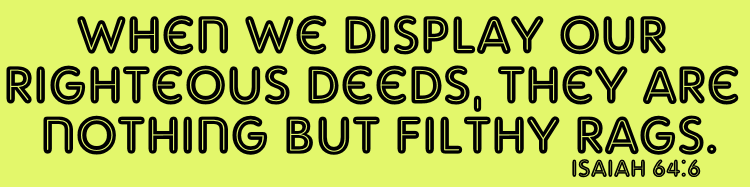
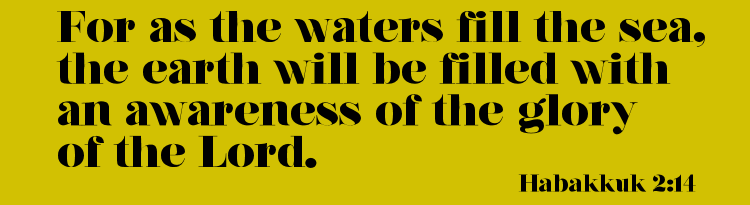
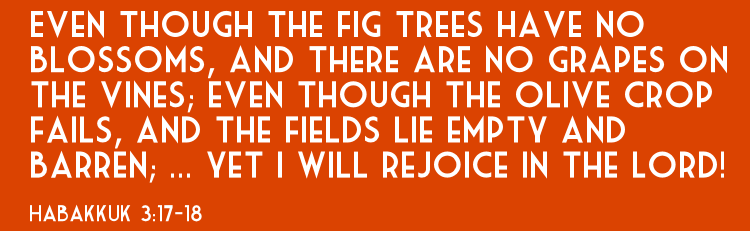
My 4 Favorite Free Fonts Right Now

I recently went on a font-downloading kick, which happens every couple of months or so, when I thumb through page after page of type. No doubt, you’ve already noticed the fruits of these typographic adventures as I’ve already been using them in recent posts and photos.

Because I’m still reading my way through the prophets, I thought I’d showcase these findings via some of the Scripture verses that have stuck out to me during my daily Bible reading. These are just a few of the verses I copied into my journal for memory’s sake, ones that I thought were particularly insightful, encouraging or just inspiring.

Together—both what the words are saying and how they look set in different fonts—they create something undeniably beautiful. Enjoy!


Isaiah 64:6 in AdamGorry-Inline


Habakkuk 2:14 in Nouvelle Vague


Habakkuk 3:17-18 in Market Deco


Jeremiah 10:24 in Lullaby

Are there any fonts (or Scriptures!) that you've been especially enjoying lately? I'd love to know in the comments!

Related Posts 
Answering Your Questions: Fonts on My Blog 
Answering Your Questions: Blog Design
READ FULL POST >>

Lessons from Reading Through the Prophets


Right now in my Bible reading plan, I’m in the midst of the prophets, as they cry out to the people to stop sinning and start loving God again, as they once did.

One of the things that has struck me as I’ve been reading through these writings is how specific many of these prophecies are. In Isaiah, he points out that Jerusalem is going to be conquered by Babylon but someday a man named Cyrus will let the Israelites return to their homeland. By name, he calls this country and this leader, and both come to pass 150 years later. In Micah, we get the prophecy of the Messiah being born in Bethlehem. By name, he gives us the city where the Savior will be born.

I’ve also noticed how similar many of these prophets' messages are. In Isaiah, he talks about “a remnant remains,” that even though God will bring destruction to the Israelites for abandoning him and worshiping other gods, he will not destroy them all. A remnant will remain, and those he will bring back to himself. Then, in Jeremiah, I noticed it again. He didn’t use the same language, word for word, but he still says that he will save a few and they will return to God’s blessing. I am reminded through these texts how consistent God is.

But I also noticed something else. How God always comes back to restoration. Even in the midst of warning the people that destruction is coming, he always points toward the future when they will be redeemed, when they will come back to him, when heaven will wipe the slate clean.

A few weeks ago, I heard some upsetting news, which left me almost in tears. It was nothing against me personally, just a story I heard. But it moved me. And my thoughts flashed to what I'd been reading through these Scriptures. Curled up against my husband in a hug, I whispered, "Someday, none of this will happen." I remembered the words of the prophets and how they always looked far into the future, when the sheep will lie down with the lions and peace will reign. It encouraged me to look there, myself, when faced with hardship close to home.

There is hope.

And that is essentially what these prophets are crying out, at the top of their lungs. Through their anger and disappointment and frustration, they are screaming out that there is hope—if we would just look to it and see.

Related Posts
Unexpected insights from a boring Old Testament list

Lessons from Nehemiah: More Than a Man Who Rebuilt a Wall
READ FULL POST >>

Selecting a Bible Reading Plan for the New Year


With the new year, I'm starting a new Bible reading plan that I wanted to share, in case any of you are also interested in using it to guide you through your Bible this year.

The one that I'm using is a chronological reading plan that arranges the Bible so that you read them in the order that the events happened (although not necessarily in the order the books were written).

I've tried out different reading plans over the past couple of years and have often wished that I had read about this prophet when I was reading about that event back in Kings or Chronicles. So, I set out to find a plan that would help me get a larger understanding of what all was going on (particularly regarding Old Testament events), intertwining the history with the prophets of the era with the Psalms being sung and so forth.

From the research I've done, it seems that this reading plan that I've selected will do that. It's set up so that by reading between about three and four chapters a day, you'll make it through the entire Bible in a year. I don't really mind how long it takes me to get through the Bible, because I care more whether I remember what happened, rather than just speed-read my way through.

But, I think that having a plan to help guide me through my Bible reading is incredibly useful and motivating, especially when you're not really in the mood to read (because that is all too often reality some days!). It also helps me read the stories I wouldn't normally want to, if I were the one arbitrarily selecting passages. (Ahem, the story in Judges where the fat guy gets a sword to the stomach? Yeah, that one.)

Anyway, so if you want to try this reading plan, you can print out a 2-page PDF that lists out each date and the corresponding readings for that day. Then just keep it with your Bible and mark off the days as you go.

(There are also a variety of other reading plans you can choose from, if you're not into the chronologically-arranged type. They also have ones that walk you through the Old and New Testaments simultaneously, or ones that integrate daily Psalms and Proverbs readings, as well as others.)

Do you have a reading plan you're using that you really like? Feel free to share it in the comments!


Related Posts
Making the Psalms Your Own
Scripture Memorization System Review
READ FULL POST >>

Scripture Memorization System Review

One of the goals I set for this year on my list of 27 Things To Do While I'm 27 was to get back into the habit of memorizing Scripture. I think it's important to have an arsenal of Bible verses stored up in our hearts so that when the need arises—whether it's for encouragement, conviction, or to bear witness—the Holy Spirit can call those words of truth up from our heart.

My approach to memorizing Bible verses has pretty much never been much of an "approach" at all, just what seemed to work: I would pick a verse that stuck out to me (from whichever translation suited me best) and try to learn it word-for-word, sometimes remembering the book, chapter and verse attribution but oftentimes forgetting them later.

That's where the Topical Memory System from The Navigators comes in, which I recently received a copy of to review. While there isn't anything "new" in this approach (no gimmicks or memorization tricks), the approach does work. They stress repetition. But not just going over the verse again and again; instead, they encourage a different memorization set-up.
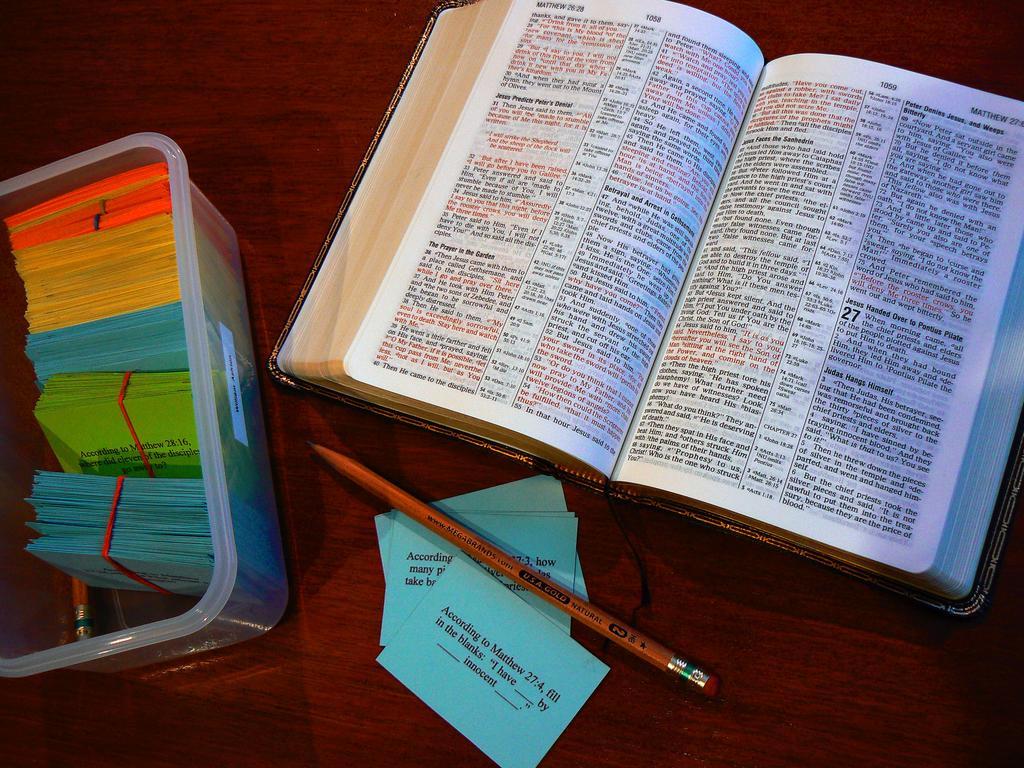
Their approach has Christians memorize verses by first memorizing the main theme of the verse (say, "Obedience to Christ.") Then you memorize the location of the verse (Romans 12:1). Finally, you memorize the verse itself, word-for-word. Then, you memorize the verse location, again. While I had never placed much attention on memorizing the verse location, I can attest that this repetition (always repeating it before and after the verse) really does solidify it so that it pops into memory. They also urge readers to read the selected verse in context so that you have a fuller understanding of what the verse is talking about.

The course comes with a workbook as well as a book of the verses you'll be memorizing over the course. The workbook lays out the foundations for memorizing verses as well as tips, activities and reflection questions to help readers delve more deeply into each verse. The companion book of verses includes every memory verse you'll be learning through the course, in a choice of 8 translations, depending on which you prefer. You can just tear the verses out as you memorize them. This is really great because then they're all the same size, already laid on in the prescribed memorization order, and ready for you from the start. I really like that they prescribe the given verses you'll memorize each week, because sometimes I've been held up on memorizing a new verse because I'm not sure which one to pick next. This eliminates that obstacle altogether!

During the course you'll learn 60 memory verses, that cover thirty different themes, such as "Humility," "Assurance of Salvation," "Develop World Vision," "Obedience to Christ," and "His Help in Temptation." They suggest that you work at the pace of memorizing two verses per week, which would calculate to 30 weeks, however you can adjust this to work for your schedule and pace.

While there is nothing earth-shattering about the course, I love that it is simple in its approach and something that any of us can put into practice. For others who are looking to beef up their knowledge of Scripture and could use a more guided approach, I think the the Topical Memory System will serve as a great tool. It definitely has for me!

Find the Topical Memory System from The Navigators on Amazon.

Related Posts
Psalms Bible Study Review
What I'm Currently Reading
READ FULL POST >>

Lessons from Nehemiah: More Than a Man Who Rebuilt a Wall


I recently finished reading my way through the book of Nehemiah in my daily Bible reading plan.

It was the first time I'd read Nehemiah's full story, beyond just rebuilding the wall but also rebuilding the people of Israel back into a God-glorifying nation. He saw the need of his people, left a life of luxury and prestige, and took up the hard task to restore his people.

As I've been reading through the Bible, I've noticed how few real "heroes" there are, despite the conventional ones we look to. Abraham was a liar. David was an adulterer. Noah got drunk and angry. Yet these are the heroes we hold up, being the first Jew, a man after God's own heart, the only righteous person on earth.

But when I read Nehemiah's story, it's almost refreshing to read a story of someone who really was able to live out their faith in a God-honoring way. It offers a glimpse that this way of life we're racing after is possible, by the grace of God.

I was also struck by his faith and the way he continually turned to God throughout the book: Throughout his story it tells how he continually prayed to God for strength and wisdom and blessing when he was about to embark on a difficult or life-threatening task. Later he tells of how "my God gave me the idea" to register all the people of Israel, making it obvious of how in tune he was with his God and able to recognize his voice. And when they find the Book of Law of Moses and everyone weeps because they realize all the evil they've been committing unknowingly, he tells them to stop crying and start celebrating, because he recognized that it is a day of joy when the Law has been rediscovered and reestablished.

And so, in this man who isn't one of the usual Sunday School superstars or Bible "heroes" everyone names their children after, I found a new appreciation and example to be commended.

Related Posts
Unexpected Insights from a Boring Old Testament List
What It Looks Like When We Take Things Into Our Own Hands: A Story of Two Brothers


{ photo }
READ FULL POST >>

For the "In-Between" Times of Life


Psalm 126 is one of my favorites because I can relate to it oh-so often. It's what I refer to as a psalm for the "in-between" times:
Psalm 126
When the LORD brought back the captives to Zion, we were like men who dreamed.  Our mouths were filled with laughter, our tongues with songs of joy. Then it was said among the nations, "The LORD has done great things for them." The LORD has done great things for us, and we are filled with joy.

Restore our fortunes, O LORD, like streams in the Negev.

Those who sow in tears will reap with songs of joy. He who goes out weeping, carrying seed to sow, will return with songs of joy, carrying sheaves with him.
In my previous Bible study in Grand Rapids last spring, we studied Beth Moore’s “Psalms of Ascent,” and looked at this particular psalm. It tells how the people are bemoaning their current situation in light of how God once blessed them so much . They desire those times again and beg God, “Restore our fortunes, LORD.” (Oh, the times when I've longed for the past like that!)

And yet, the beauty of this psalm is that they hold on to hope.

We don't do much sowing or carrying sheaves nowadays, but it's those last two sentences that grow wings and come alive to me. Look at how they talk about “sow[ing] in tears” and “go[ing] out weeping, carrying seed to sow.”

As we studied this psalm, I saw the power in these two lines: How these people pressed forward in spite of their current hardships: they continued planting…because they knew that the Lord would come along at some point and bring harvest to their actions. In spite of the discouragement and disappointment they're experiencing now--in spite of the circumstances that they face today--they look to God for hope and  hold fast to faith.

In other words, they trust not in what they can see, but in God's Word and promises.

Ecclesiastes 11:4 says this another way: “If you worry about the weather and don’t plant seeds, you won’t harvest a crop.” Even when skies are bleak or stars aren’t aligned, we have to set out and press on. We can't let the looming weather steer us away from the task at hand.

That to me is “a leap of faith.” Even if we don’t see fruit or hope immediately, we don’t give up. We continue on: asking, praying, doing, and ultimately trusting in Psalm 27:13-14: “I will see the goodness of the Lord in the land of the living. Wait for the Lord; be strong and take heart and wait for the Lord.

I often find myself in moments where I’m wishing I were already at the finish line, able to look back and smile appreciatively at everything in hindsight. Like with the unknown about our job situations or where we'll end up settling down. And yet, I know that what I do now--sowing with bold prayers, planting seeds by continuing to tithe rather than give in to the urge to stockpile finances, etc.--will bring about a harvest...when the time is right.

Related Posts
Making the Psalms Your Own
Learning to Plant In Spite of Stormy Weather


READ FULL POST >>

Unexpected insights from a boring Old Testament list


While I love making my own lists, I don't have much interest in reading them, other than to cross them off with a big swash of ink. You don't have to read through the Bible very long before you stumble upon some sort of list, whether it's a 'so-and-so beget so-and-so" genealogy or a list of do-and-don't laws.

I was reading through the Old Testament book of Numbers and reached a list that detailed a bunch of Middle Eastern places where the Israelites journeyed after they left Egypt on their way to the promised land, West of the Jordan River. As I was reading, I found myself start skimming, murmuring to myself, "Yeah, yeah, yeah. They moved a lot of places. Let's skip ahead to the good stuff."

Which made me wonder: Why did God include this laundry list of locations? Why is this important? Obviously it must be, to make it in the Holy Word, so what might that be? Over and over again they moved around on this journey to their home. Perhaps this is a bird's eye view of all our lives: God is moving us from point a to b to c to d to e...

And then I noticed that as Moses listed each location, occasionally he'd offer a short description like this place was a desert, this one was without any water or it was an oasis with "12 springs and 70 palm trees." This list goes from Numbers 33:5-37, so about 32 moves. Of these, there are 4 deserts they journey through, one noted place where "there was no water for the people to drink," a sea they journey through and one oasis that they reach after making their way out of the wilderness. Most of the time, though, the places were pretty ordinary with little to say about them.

Does this sound like our lives? A few notable peaks and valleys, and a lot of seemingly unmentionable stuff in the middle? And yet, God mentions it. Verse 2 says, "At the LORD's command Moses wrote down the places where they went as they traveled. This is the list." He watched and recorded it all. And because God is the same as he ever was, he continues to watch it and record it all in our journeys even now. Every blip on the map matters to him and take us to where we're going: The promised land.

Related Posts
Why I love reading the Old Testament
Making the Psalms Your Own

{ photo by Static of the Gods } 

READ FULL POST >>
Previous Post
Related Posts Plugin for WordPress, Blogger...